
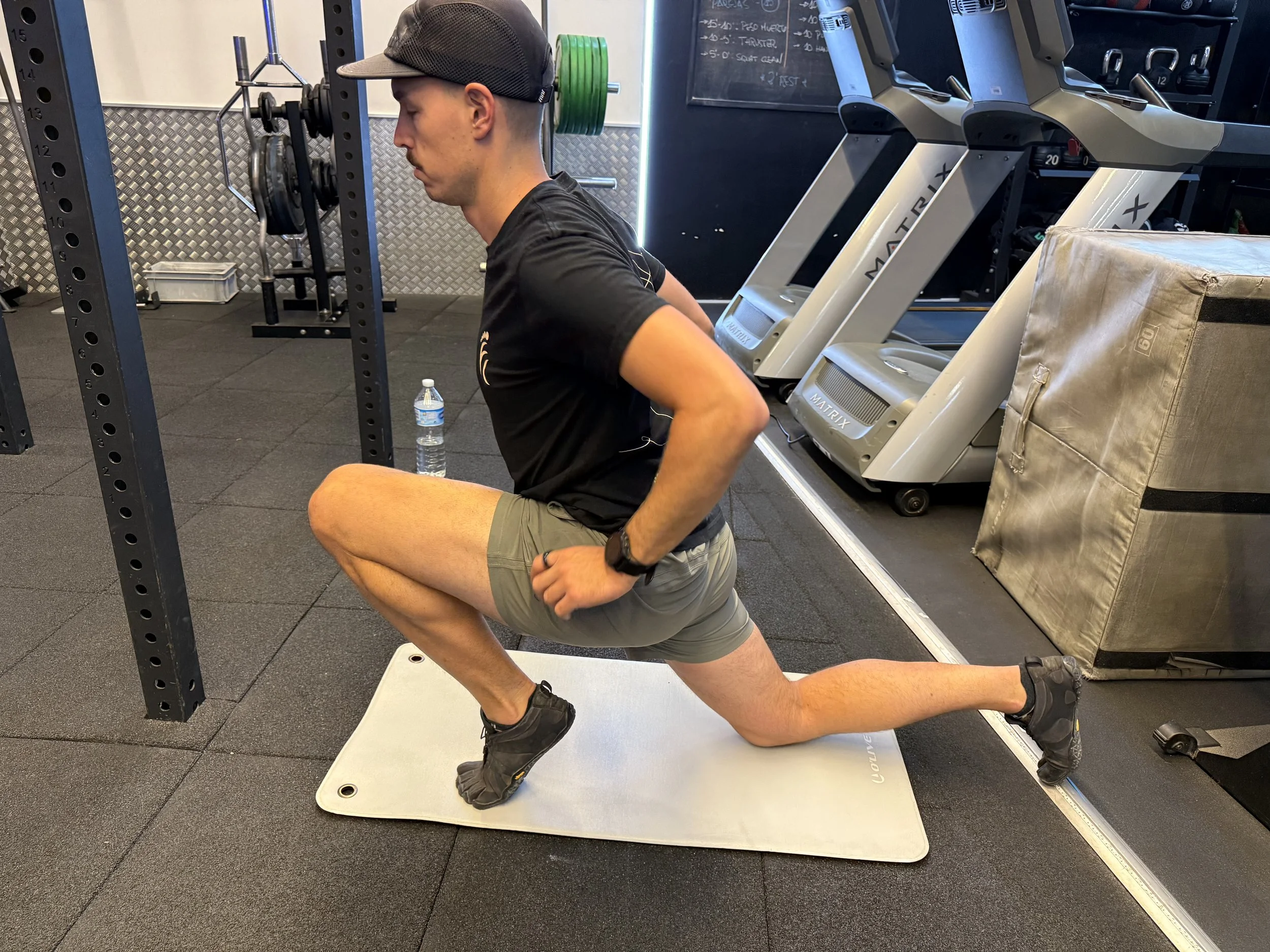
Strong Feet, Stable Body.
Why Foot Strength Shapes Your Balance, Power and Performance.
Updated 20 November 2025
⏱️ 8-10 Minutes
Strong, stable feet form the foundation of every movement you make, from standing and walking, to cutting, jumping, lifting, running and changing direction with confidence. Whether you’re an athlete chasing performance or an everyday mover who wants to feel grounded and pain-free, the way your feet interact with the ground determines how the rest of your body moves above them.
Yet most people never train their feet.
Most athletes rely on footwear or braces to do the job their body was designed for.
And most injuries linked to “weak ankles,” “tight calves,” “poor balance,” or “knee valgus” actually begin lower at the foot.
This guide will walk you through what strong feet actually are, why they matter for performance and long-term health, how to test your own foot strength at home, and simple, progressive drills to build resilient, high-functioning feet.
In This Guide
- 📘 Introduction
- 🦶 Feet, The Forgotten Body Part
- 💪 What We Mean by 'Strong Feet'
- ⚡ Foot Strength Matters for Performance
- 🏃♂️ Who Benefits from Stronger Feet
- 🛠️ Causes of Weak Feet
- 👣 Symptoms of Weak Feet
- 🔍 At-Home Foot Tests (Quick Screens)
- 📈 How to Build Strong, Stable Feet
- 👟 Lifestyle, Footwear & Loading Habits
- 🚨 When to Seek Help
- 🎯 Your Takeaway
- ❓ FAQs
- 🧑⚕️ Tom's Bio
Feet, The Forgotten Body Part
When it comes to overall movement, we often focus on big muscles, the quads, glutes and so on. But what about your feet? You see, the strength and function of your feet can influence everything up the chain.
If you think about it, your feet are literally the foundation your body moves on. The more strong, mobile and robust your feet are, the more adaptable, stable and resilient your body will be.
The issue? Less than 5% of all footwear sold worldwide allows the foot to function as it is suppose. Meaning people slip shoes on, not realising the effects it is having on their feet. This causes the foot to become weaker, less resilient and causes a lack of function of their foot.
Most people never notice this gradual change happening underneath them until something further up the chain begins to complain. A weak arch can alter knee mechanics, stiff toes reduce propulsion when running, and poor foot awareness forces the hips and lower back to work overtime. Over months and years, this can influence balance, movement efficiency, and even the way you breathe and stabilise through your trunk. Strong, functional feet aren’t just about avoiding injuries; they’re about giving your entire body a more capable, responsive platform to move from.
What We Mean by ‘Strong Feet’
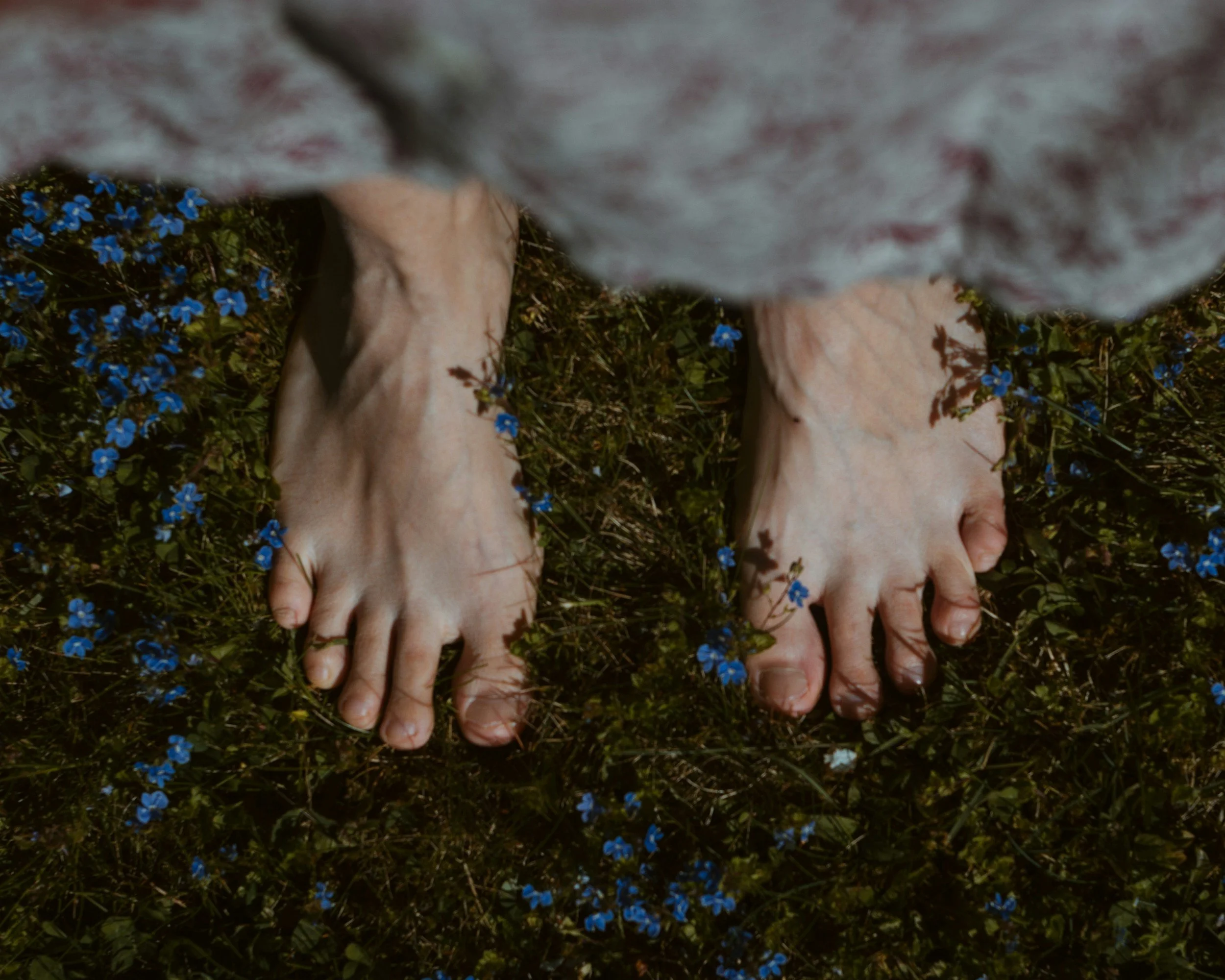
Your feet contain 26 bones, 33 joints, 24 muscles, 180 + ligaments and thousands of sensory receptors all working together to create stability, mobility, balance and force transfer.
Strong feet are therefore not just ‘muscular’, that are:
Mobile ✔️
Responsive ✔️
Coordinated ✔️
Create and Control Pressure ✔️
Produce and Absorb Force ✔️
Think of your foot as your body’s suspension, steering and shock absorber all in one. If it’s stiff, unstable, or undertrained, you lose efficiency everywhere else, knees, hips, pelvis, trunk, and even your breathing mechanics must compensate.
Strong feet = strong movement.
Foot Strength Matters for Performance
If you’re an athlete, your feet influence:
Acceleration & sprinting mechanics: A stable big toe and strong arch allow better push-off and cleaner propulsion.
Change of direction & agility: You can only cut as well as your foot can load, grip and redirect force.
Running economy: Efficient foot mechanics reduce wasted energy and improve cadence, stride integrity and landing efficiency.
Lifting technique: A stable base improves force transfer through the legs and trunk,
Jumping & landing: Feet that can stiffen at the right time protect the chain above them.
Balance & proprioception: More sensation = more control.
For everyday movers, strong feet mean:
Better posture <> Better Balance <> Less Fatigue <> More Confidence (in Movement)
Strong feet don’t just make you better at training, they make you better at life.
Who Benefits From Stronger Feet
Everyone who moves benefits, especially those whose performance depends on it.
Athletes (all sports): Especially runners, footballers, netballers, basketballers, surfers, tennis players.
Active adults: More efficient walking, standing and training.
People with foot or lower limb pain: Plantar heel pain, bunions, Achilles issues, shin pain, toe stiffness.
Older adults: Better balance, reduced fall risk.
Desk-based workers: Feet lose strength when under-stimulated.
People in cushioned shoes long-term: The foot becomes passive when the shoe does the job.
There is no sub population that wont benefit from having stronger, more resilience feet.
Causes of Weak Feet
Foot weakness rarely comes from a single reason. Usually it’s a combination of:
1. Footwear choices: Narrow toe boxes, elevated heels, stiff soles, high cushioning reduce:
2. Lack of varied load: Modern life = flat floors, little barefoot time.
3. Toe stiffness: Especially the big toe (hallux), essential for propulsion.
4. Low proprioception: Feet stop “talking” to the brain when always protected.
5. Previous injuries: Sprains, immobilisation, surgeries, calf tears.
6. Sedentary lifestyle: Weakness from underuse.
7. Over-reliance on supportive devices: Orthotics or braces are fantastic tools — but long-term dependence can reduce intrinsic foot muscle engagement.
Symptoms of Weak Feet
You may have foot weakness if you notice:
Gripping your toes for balance
Collapsing arches
Feet fatiguing quickly
Instability on uneven ground
Recurring ankle niggles
Difficulty lifting toes independently
Trouble balancing on one leg
Pushing off your big toe feels “weak”
Tight calves that never seem to settle
If you’re an athlete:
Early fatigue during running
Inefficient push-off
Uneven wear on shoes
Slow acceleration
Difficulty with explosive change of direction
At Home Foot Tests (Quick Screens)
Test 1: Big Toe Lift
Test: Can you lift your big toe without the other toes joining?
Goal: Lift big toe without the other toes moving.
What it tells you: Big toe control, arch activation, neural connection.
Why we do it: We want to know how good your connection to your big toe is
What to do if you can't: Practice repetitions in easier positions such as sitting. Use your fingers to hold the little toes down as you try to lift the big toe up. Practice aiming for a target (i.e. your index finger) with your big toe to improve the connection.
Test 2: Big Toe Bend
Test: Can your big toe bend to ~55-60°?
Goal: Bend your big toe up to 60°
What it tells you: Essential for push-off during walking and running
Why we do it: We want to know if your big toe can bend as much as it needs to for function
What to do if you can't: Work through pain-free range passively or actively to start improving
Test 3: Calf Raise Quality
Test: Do a single-leg calf raise 6 times
Goal: Smooth movement up and down with toes staying long and strong
What it tells you: Foot-ankle stiffness & alignment control.
Why we do it: Before testing ‘capacity’, we want to see how you do it
What to do if you can’t: Start with two-leg calf raises and focus on controlling the movement through the full range. Use a wall or bench for balance. If the heel wobbles, reduce the height of the raise until you can keep the ankle straight. Gradually build toward single-leg reps.
Test 4: Do our TFC Balance Screen
Test: Go through 4 different balance tests
Goal: Be able at a blue balance level
What it tells you: Proprioception, ankle strategy, foot stability
Why we do it: If you cant balance, you lose strength, speed and power.
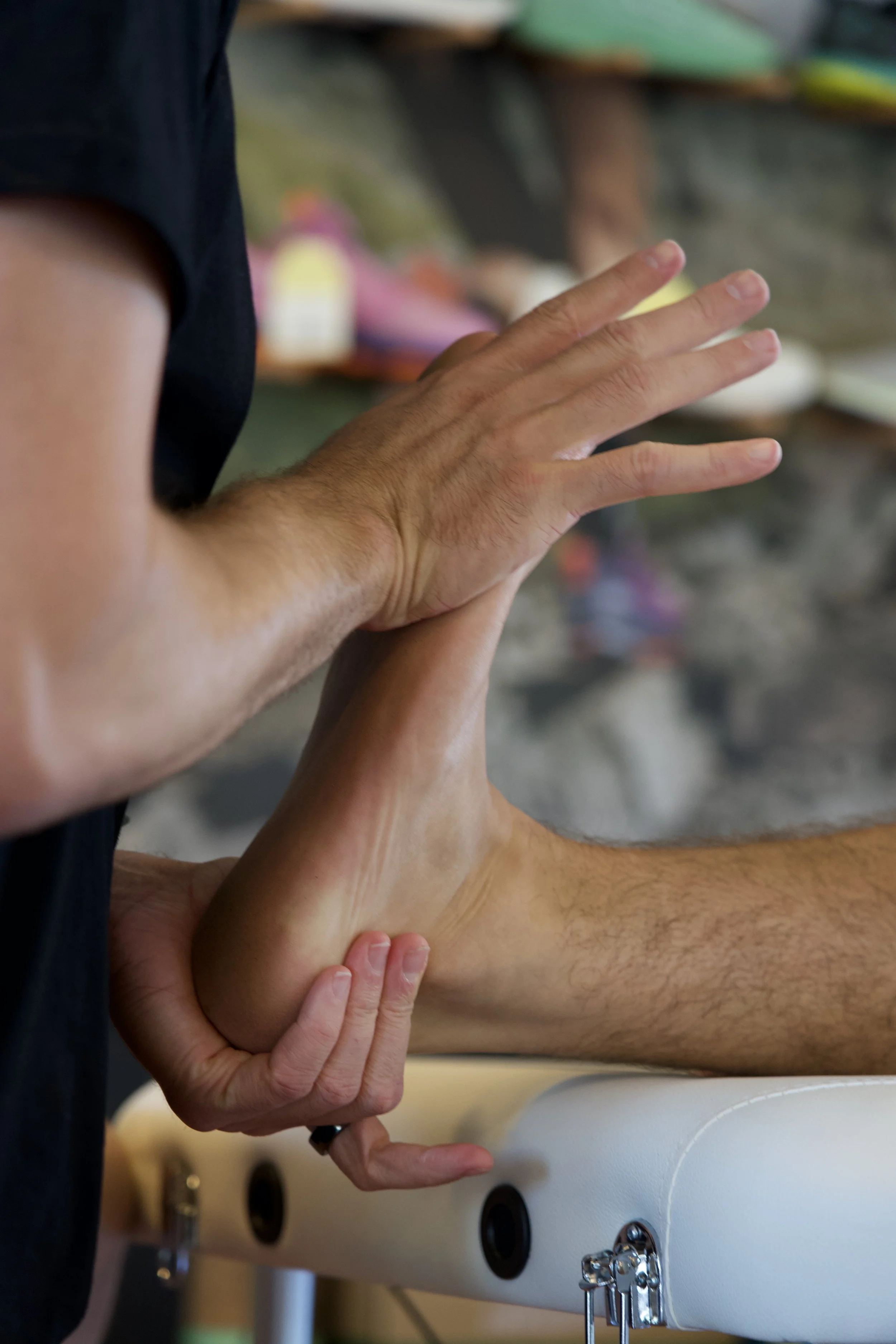
How to Build Strong, Stable Feet
You don’t need fancy equipment, just awareness and consistent practice. Here are some practical approaches:
Foot mobility exercises: Try ankle circles, toe splay, and arch lifts to keep joints and muscles flexible.
Intrinsic foot strengthening: Using the intrinsic muscles of the foot loaded exercises and introducing pressure sensation.
Balance and single-leg drills: Standing on one leg or doing gentle hops challenges foot stability and improves proprioception.
Barefoot or minimalist practice (where safe): Walking or moving barefoot strengthens foot muscles and improves sensory feedback from the ground.
Lifestyle, Footwear & Loading Habits
✔ Spend more time barefoot when safe: Helps restore sensation and control.
✔ Choose shoes with line up with the 5 F’s of Natural Footwear:
Foot-Shaped (shaped like a foot)
Fixed (fixed to your foot)
Flat (flat heel to toe)
Flexible (flexible through each part of the shoe)
Feel (allows you to feel the ground)
✔ Vary surfaces: Grass, gym mat, carpet, sand, trails.
✔ Don’t overload too quickly: Ease into barefoot or minimalist transitions.
✔ Train your feet like any other muscle: Consistency > intensity.
When to Seek Help
If you notice any of the following:
Sharp or persistent foot pain
Recurring ankle sprains
Forefoot or heel pain that lasts > 6 weeks
Numbness or tingling
Sudden swelling
Pain interfering with training
I highly recommend checking out the Foot Restoration Program we created at The Foot Collective to help you get started on your journey. It is our 12 week, online program designed to help you improve your movement, pain and restore natural foot function
Strong, stable feet don’t just support your body, they shape how confidently and efficiently you move through the world. Every step is a chance to reconnect, build strength, balance and awareness from the ground up.
👉 Start your journey:
The Foot Restoration Program is a guided path to rebuild strength, mobility, and connection from the ground up. Learn how to restore your foundation so your whole body can move better, feel better, and perform better. Use code BAREFOOTBREATH at checkout to save 15%!
✋ Need specific help?
Book a Consultation with me and let’s get you started on your journey to restoring natural foot function, improving your balance and optimising your performance.
Your Takeaway
FAQs
Frequently Asked Questions
-
People notice changes within 10-30 minutes of doing foot training. However, proper strength adaptation will take 6-8 weeks.
-
Pain is multi-factorial and can never be caused by one thing. However, weakness in your foundation (i.e. feet) can put more load onto the knees and hips and contribute to a pain experience.
-
It depends! Some people can go barefoot just fine with no issues. Others take more time to adapt.
It depends on your own, unique history of movement, injuries and what your goals/motivations are.
-
Short answer, yes.
Long answer, you need to work on the strength and capacity of your feet in order to make the changes. Toe spacers can help you start the process, but won’t get you all the way there.
-
It is non-negotiable. If you are an athlete who doesn’t train their feet, you are missing out on performance benefits from speed and strength, to visual deficits and slower cognitive processing.
-
No. Like any tool, they can be quite helpful. However, you always need a plan to get out of the orthotic as in the long term, they will reduce your strength and capacity.
-
This is very normal, particularly at the start of your journey. Remember, your feet have muscles like the rest of your body.
When you train muscles, they get tired. The reason your feet tend to feel more fatigued is due to a lack of training and a high number of nerve endings sending signals back to your nervous system.
-
Children should be barefoot as much as possible.
If children play barefoot, move around on different surfaces, different terrains and just use their feet, they don’t need exercises.
-
Check out The Foot Collective’s Footwear Finder or Anya' Review’s Website to find the style of shoe your looking for.
-
Item description
Tom’s Bio
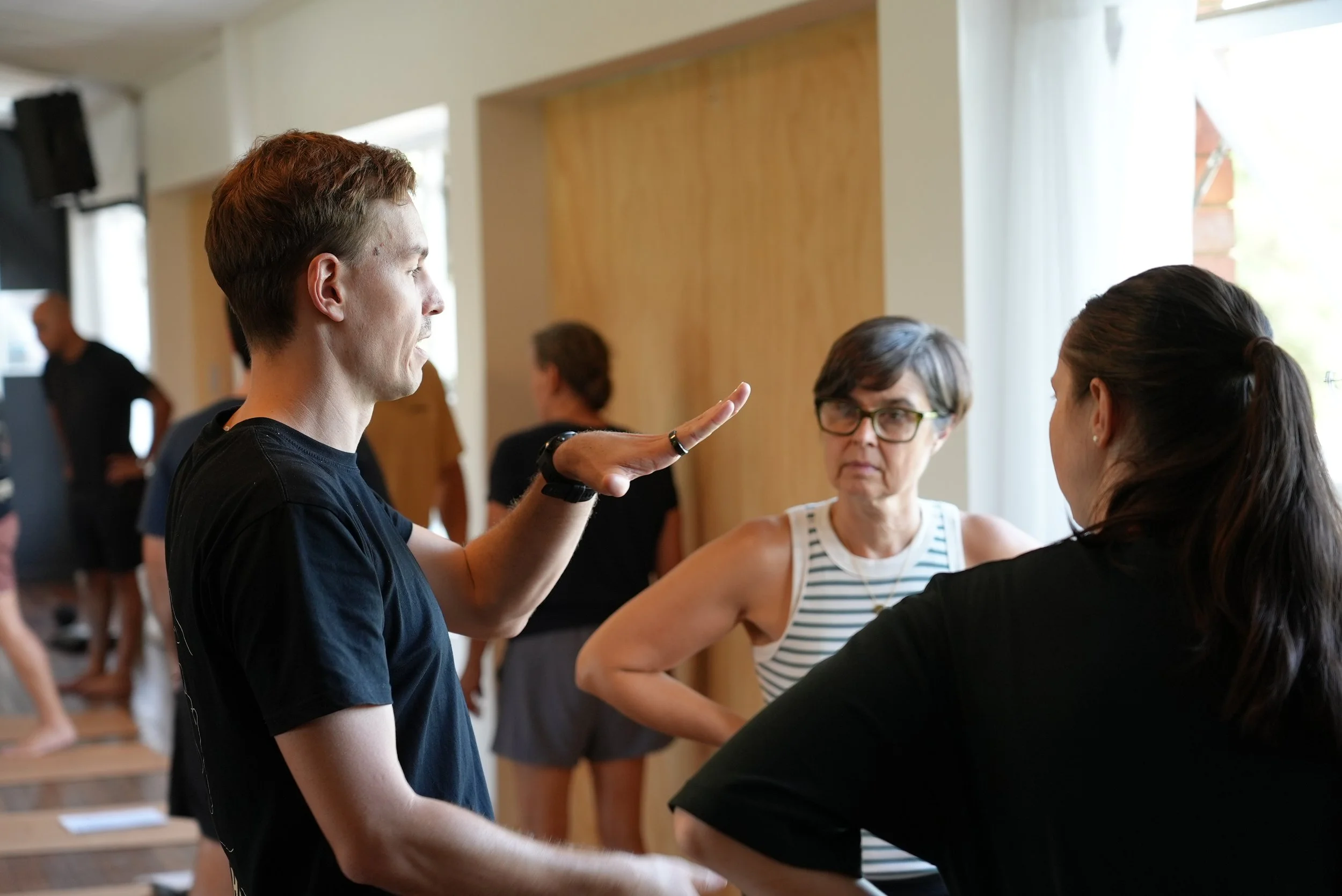
Tom Williams is a physiotherapist with a special interest in foot function, running mechanics and performance breathing. With a foundation in sport and exercise science, he works with athletes and active adults to build stronger, more capable bodies from the ground up. Through Barefoot Breath Performance, Tom blends physiotherapy with movement coaching to improve strength, efficiency and long-term resilience.
Tom is also the Head of Physiotherapy and Education at The Foot Collective. His goal is to help teach people all over the world the importance of natural foot function for health, movement and performance.